
What Does Your Rice Purity Score Mean? Complete Score Breakdown Guide (2026)
So you just took the Rice Purity Test and got your score — but what does your Rice Purity Test score mean, exactly? Is an 82 good? Is a 45 bad? Should you be proud of a 97, or is that boring?
You’re not alone in asking. People often search for score interpretations, comparing numbers with friends and trying to figure out where they stand. This guide breaks down every score range, explains what each one generally suggests, and — most importantly — puts the whole thing in perspective.

Quick note: The Rice Purity Test is a fun, informal quiz created decades ago. It’s entertainment, not a scientific measurement. Nothing here is a judgment of your character.
How the Rice Purity Test Score Works
The test asks 100 yes-or-no questions about life experiences. You start at 100, and every “yes” answer subtracts one point. The lower your score, the more experiences you’ve checked off.
That’s it — there’s no complicated algorithm. Your final number is simply 100 minus the number of boxes you ticked.
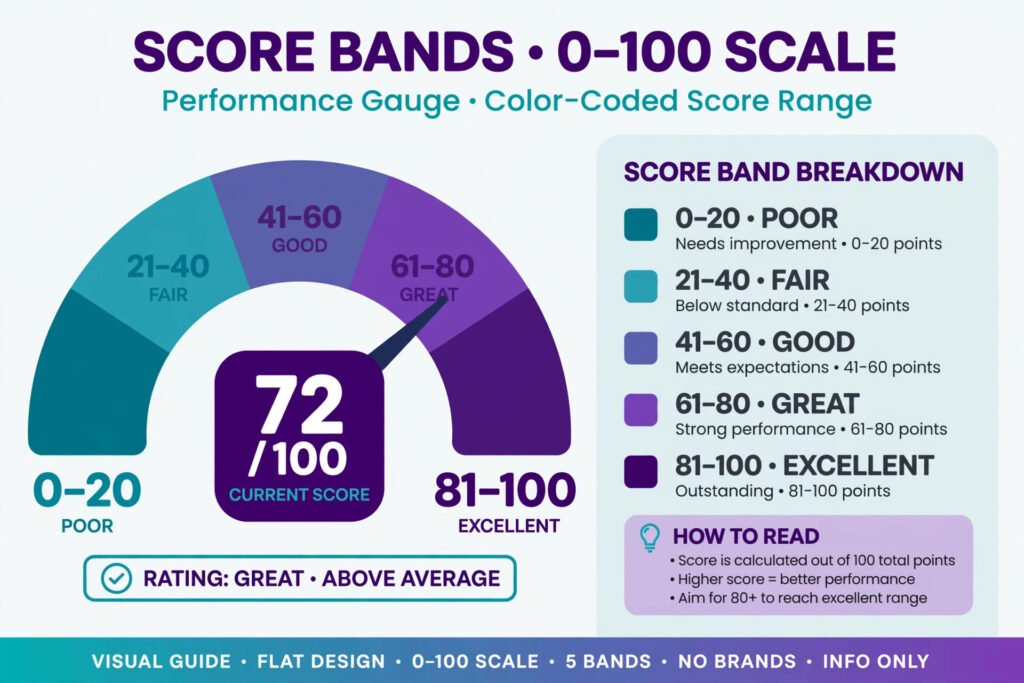
Rice Purity Score Ranges Explained
One important caveat: there is no official published data on Rice Purity Test score distributions. The interpretations below are informal — based on how test-takers commonly describe their scores in online discussions — not verified statistics. Treat them as playful illustrations, not facts.
100–98: The “Pure” Zone
A score in this range means you’ve said “no” to nearly everything. People who report scores up here are often younger test-takers — high school students or younger college freshmen — though plenty of people of any age can land here.
What it suggests: You’re early in your life experiences, cautious by nature, or simply haven’t had many opportunities yet. There’s nothing wrong with this — everyone starts somewhere, and plenty of people are perfectly happy taking life slow.
Common reaction: Friends might tease you for being “innocent,” but honestly, a high score just means you have more firsts ahead of you.
97–90: Mostly Pure
You’ve had a few experiences — maybe a first relationship, a party or two — but overall you’re still on the cautious side. Many people who share scores in this range describe themselves as freshmen or sophomores just starting to explore.
What it suggests: You’re dipping your toes in. You’ve started exploring but still keep things pretty tame.
89–77: Around the Middle
Scores in this range are often described in online discussions as “average” — you’ve lived a little: relationships, social events, maybe some mild rule-bending. Again, that’s anecdotal, not a measured average.
What it suggests: A fairly typical young-adult experience. Nothing extreme, nothing sheltered — just a normal mix.
76–60: Experienced
Checking off this many boxes suggests someone who’s been around the block socially — likely some serious relationships, an active social life, and a willingness to try new things.
What it suggests: You’re adventurous and socially active. People in this range are often the ones with the best stories at parties.
59–45: Very Experienced
Scores here indicate a wide range of life experiences. You’ve likely done most of the things the quiz asks about, at least in the milder categories.
What it suggests: You’ve lived boldly. Whether that’s something you’re proud of or just a phase of life is entirely up to you.
44–30: Wild
Scores down here are relatively uncommon in the score-sharing posts you see online, and usually belong to people with very adventurous lifestyles or older test-takers who’ve simply had more years to accumulate experiences.
What it suggests: You’ve checked off a lot of boxes. Friends probably come to you for advice — or warnings.
29–0: Extremely Rare
Scores this low are very rarely reported — and typically only appear with older adults who’ve lived long, full lives — or, let’s be honest, people who exaggerated their answers for fun.
What it suggests: Either a lifetime of experiences or a healthy imagination. Either way, it’s a conversation starter.
What Does 70 Mean on the Rice Purity Test?
A score of 70 lands you in the “experienced but balanced” zone. You’ve had a solid share of typical college experiences — relationships, social events, a few adventures — without going overboard. It’s a score many people report in online discussions, and a completely unremarkable one in the best way.
What Does 50 Mean on the Rice Purity Test?
Fifty is right in the middle — half the boxes checked. This suggests a very full social life and a willingness to say “yes” to new experiences. It’s a middle-of-the-road score, and people who score here tend to be outgoing and adventurous.
Does a Higher Score Mean You’re “Better”?
No — and this is important. The test was originally created as a bonding activity for Rice University freshmen, a way to laugh together and compare notes. It was never meant to rank anyone’s worth.
A high score doesn’t make you boring. A low score doesn’t make you cool. They’re just numbers reflecting different life paths, personalities, and circumstances. Someone who grew up in a small town with strict parents will naturally score higher than someone who grew up in a big city — and neither path is better.
Why Do People Care So Much About Their Score?
A few reasons:
- Social bonding — Comparing scores is a classic icebreaker in dorms and friend groups.
- Curiosity — We all wonder how our experiences stack up.
- Nostalgia — Retaking the test years later and watching your score drop is a fun trip down memory lane.
- Identity — For better or worse, people attach meaning to the number.
Tips for Interpreting Your Score Honestly
- Answer truthfully the first time. The test is only fun if it’s real.
- Don’t compare too seriously. Your friend’s 45 and your 85 reflect different lives, not different values.
- Retake it yearly. Watching your number change over time is half the fun.
- Remember the context. The questions were written decades ago; some feel dated, and that’s part of the charm.
Related Reading
- Related: Rice Purity Test Questions Explained: The Updated 2026 List
- Related: Is the Rice Purity Test Accurate? What Your Score Actually Says About You
Frequently Asked Questions
What is a good Rice Purity Test score?
There’s no “good” or “bad” score — it depends entirely on your age, lifestyle, and personality. There is also no official published average score, so anyone claiming one is guessing. That said, in informal online discussions, test-takers report scores across a wide middle range, and just about anywhere in that spread is unremarkable.
What does it mean if I scored 100 on the Rice Purity Test?
A 100 means you answered “no” to every question. It’s common for younger test-takers and simply means you haven’t had many of the experiences listed yet. Totally normal.
Can my Rice Purity score go back up?
No — the test only moves in one direction. Once you’ve had an experience, you can’t uncheck the box. That’s why people enjoy retaking it over the years to see how far their score has dropped.
Is a low Rice Purity score something to be embarrassed about?
Not at all. The test is meant to be fun, not a moral report card. Your score reflects your experiences, not your worth — and plenty of people wear a low score as a badge of honor.
Disclaimer: The Rice Purity Test is an informal entertainment quiz. Scores are for fun and social bonding only, and should never be used to judge anyone’s character or choices.





6 Comments