
The History of the Rice Purity Test: From Rice University to TikTok
The rice purity test history is longer and stranger than most people expect. Ask where the test came from and you will get confident answers — “a campus icebreaker from the 1980s,” “a 1920s student newspaper survey,” “a TikTok trend from 2020.” The honest answer is that all three contain some truth: the timeline runs roughly a century, from a Houston university campus to billions of social media views — passed from person to person and revised in every generation, like a folk song. Here is the full story, era by era, including the parts still disputed.
Why the Origin Story Is Messier Than You Think
There are two competing accounts of where the test began, and responsible retellings should acknowledge both.
The 1924 account holds that the first version was published in The Rice Thresher, Rice University’s student newspaper, in 1924. Only two questions from that original version reportedly survive in the modern test — “Have you ever cheated?” and “Have you ever been drunk?” — the rest has been rewritten many times over.
The 1980s account describes the test as a paper icebreaker created by students and handed out during orientation week at Rice University — passed around dorms, checked with a pencil, and laughed over in person.
These accounts are not necessarily contradictory: an early-1920s survey likely existed, faded, and was revived and reshaped decades later by new generations — each convinced they were carrying on an old tradition while quietly rewriting it. That cycle of revival and revision is the real story.
A Full Timeline of the Rice Purity Test
1924: The First Version Appears
Rice University in Houston, Texas, was barely a decade old when the first purity-style survey reportedly appeared in its student newspaper. College culture in the 1920s was a collision of old conservatism and Jazz Age looseness, and student publications loved provocative questionnaires. The original survey was short, tame by modern standards, and — importantly — voluntary. Students filled it out, compared answers, and used it as a conversation piece. The basic idea was already in place: a checklist of experiences, honestly answered, producing a number you could compare with friends.
1974 and 1988: The Test Resurfaces and Gets Rewritten
The test did not run continuously for a century — it disappeared and came back. It reportedly resurfaced in 1974, and again in 1988 in a heavily edited form. The 1988 revision is a time capsule: it included questions reflecting that era’s anxieties, some of which read as shocking today. Historical reporting notes that this version contained questions about child molestation and statutory rape — items that reflected a different, darker editorial sensibility and were later removed. Each revival kept the skeleton (100 questions, subtract-from-100 scoring) while replacing the flesh.
1998: The Modern Format Takes Shape
By 1998 the test had been cleaned up and modernized. The most dated material was gone, and — significantly — the language became more inclusive. Instead of separate sections for different orientations, the test adopted the phrase “members of the preferred sex” (MPS), a term that survives in the modern test and still confuses first-time takers. This was the version that would travel: the 100-question checklist that most people recognize today.
The Paper Era: Dorm Rooms and Photocopies
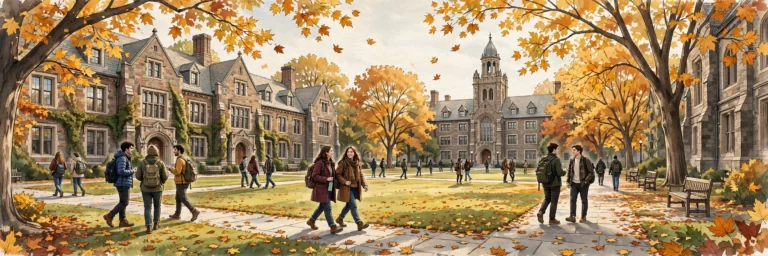
For decades the test lived on paper: upperclassmen handed it to freshmen during orientation, roommates passed it around on the first night in the dorm, and photocopies accumulated coffee stains and annotations. This was when it became a freshman tradition — not an official program, but a student-maintained ritual. Answering in pencil, you could see a friend’s reactions in real time; the reveal was a shared event, not a solitary screen tap.
The Early Internet: BBS, Usenet, and Blogs
In the 1990s the test migrated to bulletin board systems and Usenet groups, then to blogs and early social profiles in the 2000s. Going digital did two things: it froze the question set and spread the test beyond university networks — high schoolers with no connection to Rice were taking it for the first time.
The 2010s: Reddit, Tumblr, and Screenshot Culture
Online communities formed around comparing scores, and purpose-built quiz sites added auto-scoring. The score became a public identity signal — postable in a bio, droppable in conversation — while screenshots on Instagram and early TikTok carried the test to a younger, global audience.
The 2020s: The TikTok Explosion
Reaction videos turned the test into a genuine phenomenon: billions of hashtag views, translations into dozens of languages, couples and dorm floors filming themselves taking it question by question. Most takers had never heard of Rice University and assumed TikTok invented it — the app was just the latest carrier for a century-old idea.
2024–2026: Modernized Versions for a New Generation
Recent editions add questions about social media, online dating, and digital life — the experiences defining young adulthood now. The skeleton is unchanged (100 items, start at 100, ubtract), which reveals the real insight: the format was the invention, not the questions. Any generation can pour its own experiences into the same mold.

Why This Quiz Refused to Die
Plenty of internet quizzes go viral and vanish. This one survived for a century, and the reasons are structural:
- It produces a single comparable number. A room of strangers can compare results without anyone revealing which boxes they checked. That is a remarkably efficient icebreaker, and it explains the test’s persistence better than anything about its content.
- Disclosure without detail. Sharing a score reveals something personal while keeping the specifics private. It invites curiosity without forcing confession.
- It is retakeable. Experiences accumulate, so the score moves over time — many take it as freshmen and again as seniors, using it as a personal time capsule. That built-in replay value is rare.
- It arrived at the right moment, repeatedly. Orientation week, the first night in a dorm, a viral video trend — the test keeps meeting people at moments when they are primed to compare themselves with a new peer group.
For the modern campus picture, see our freshman orientation guide and how colleges turned the test into a ritual. Confused by terms like MPS? Our glossary explains them.
What Is Documented vs. What Is Legend
To be transparent about the limits of the record:
- Well documented: the 1924 Thresher origin (cited in the paper’s own reporting), the 1974 and 1988 revivals, the 1998 cleanup and MPS language, the paper-dorm tradition, the internet migration, and the TikTok-era explosion.
- Plausible but hard to verify: exact authorship at each stage, pre-internet circulation numbers, and which campus first exported it beyond Rice.
- Legend: claims that the test was ever an official university requirement, that Rice University administers or endorses it today (it does not — the closest thing to an “official” version is the one maintained by the student newspaper), or that any single person invented the 100-question format.
That ambiguity is part of the charm. The test was never a product with a launch date; it was a tradition with many authors.

Frequently Asked Questions
Who invented the Rice Purity Test?
No single inventor is documented. The earliest version is associated with Rice University students and The Rice Thresher in 1924, but generations of students revised it anonymously afterward — folk authorship, not a credited invention.
Is the Rice Purity Test affiliated with Rice University?
No. It began among students there, and the student newspaper maintains a version, but the university itself does not administer, endorse, or require it. Modern quiz websites using the format are independent.
When did the Rice Purity Test become popular on TikTok?
The major wave ran from roughly 2020 through 2023, when reaction videos and the hashtag’s billions of views carried it worldwide. It had smaller viral moments on earlier platforms (Reddit, Tumblr, Instagram) throughout the 2010s.
Has the test changed over the years?
Constantly. Only a couple of questions from the earliest versions survive. Each generation has updated the questions to reflect its own social norms — which is exactly why the test still feels relevant instead of like a museum piece.
Just for fun — your score doesn’t define you. The test is a century-old conversation starter, not a verdict on anyone’s character.




2 Comments